Things to Do in Vang Vieng
Limestone cliffs, lazy rivers, and a Laotian dream you can still get lost in.
Top Things to Do in Vang Vieng
Find activities and tours you'll actually want to do. Book through our partners -- no booking fees.


Plan Your Trip
Essential guides for timing and budgeting
Climate Guide
Best times to visit based on weather and events
View guide →Day Trips
The best excursions and nearby destinations worth the journey
Explore day trips →Where to Stay
Best neighbourhoods, hotel picks, and booking tips
Find hotels →Travel Insurance
What's required, what coverage matters, and how to get a quote
Read guide →What to Pack
Climate-specific gear, essentials, and what to leave at home
See packing list →When Should You Visit Vang Vieng?
Tap a month for weather, crowds, and highlights
View full year-round climate guide →Your Guide to Vang Vieng
About Vang Vieng
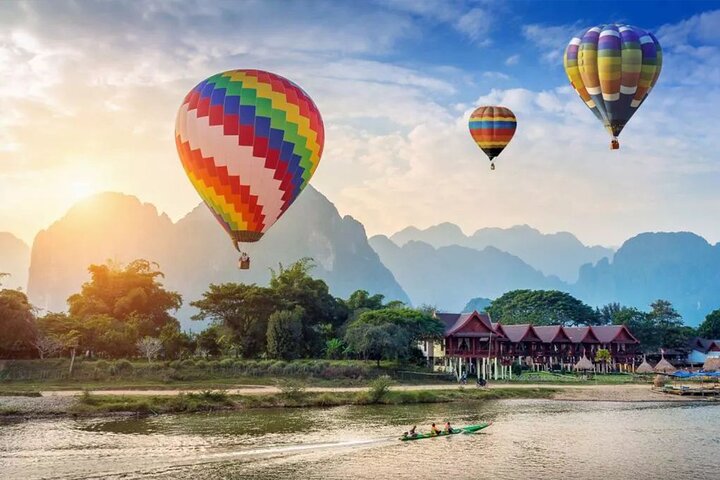
Vang Vieng slaps you awake with green after the dusty highway from Vientiane. The Nam Song River drifts so lazily it mirrors the jagged karsts that punch holes in the sky, the water a milky jade that traps the afternoon sun. This town rewrote its own script. Riverfront bars that once blasted techno to backpackers on inner tubes are gone, replaced by quiet guesthouses where the loudest sound is a longtail boat engine clattering by.
Real action lies beyond the main strip. Rent a scooter for 70,000 kip (about $3.50) and head south past rice paddies where the road turns to red dirt and leads to Tham Phu Kham cave and its electric-blue lagoon, or north to Tham Nam, a water cave you explore by pulling yourself along a rope in near-total darkness. The town itself is a grid of two-story guesthouses and noodle shops, where the smell of grilled pork skewers and sticky rice steams out of open kitchens at dusk.
Better food waits at the night market along the river for 20,000 kip a plate than at most tourist-oriented restaurants. Trade-off is infrastructure, still catching up to the scenery. Roads are rough, power cuts happen, and Wi-Fi is best described as optimistic. That is part of the charm. Vang Vieng forces you to slow down, look up, and remember what you came to Laos to find.
Travel Tips
Transportation: Getting around Vang Vieng is an exercise in simplicity. The town is small enough to walk. But to reach the caves and lagoons, you will need wheels. Renting a basic scooter for a day typically costs between 70,000 and 100,000 kip (roughly $3.50 to $5). Make sure the bike comes with a helmet and check the brakes before you hand over the cash. For longer distances, like the trip to the organic mulberry farm, a tuk-tuk is the way to go. Agree on a price before you get in, and expect to pay around 150,000 kip for a round-trip for a small group. One potential pitfall is the roads outside town, which can be rutted and muddy after rain, take it slow. Insider trick: many guesthouses offer free bicycle rentals to guests. It is a perfect, cost-free way to pedal the quiet paths along the river.
Money: Cash is king in Vang Vieng, and the Lao kip is the currency of daily life. You will get the best exchange rates by withdrawing kip from ATMs with a foreign card, though expect a flat fee of about 20,000 kip per transaction. US dollars and Thai baht are sometimes accepted for larger purchases like hotel bills or tour packages. But you will always get a better deal paying in kip for street food, market souvenirs, and scooter rentals. A decent meal at a local restaurant might run you 40,000 kip, while a Beerlao by the river is about 15,000. Main pitfall is that credit cards are virtually useless outside a handful of upscale hotels. Insider move: break larger bills at your guesthouse or a supermarket. Many small vendors and moto-taxi drivers will not have change for a 100,000 kip note first thing in the morning.
Cultural Respect: Laos is a conservative Buddhist country, and Vang Vieng, despite its tourist history, is no exception. When visiting temples like Wat Kang or Wat Si Vieng Song, dress modestly, shoulders and knees covered. It is customary to remove your shoes before entering any temple building or a private home. The Lao greeting, the 'nop' (a slight bow with palms pressed together), is appreciated, when interacting with elders. A common misstep involves public displays of affection, which are frowned upon, and loud, boisterous behavior, which is seen as disrespectful. When giving or receiving something, use your right hand or both hands, never just the left. Easy way to show respect is to learn a few basic phrases: 'sabai dee' (hello) and 'kop jai' (thank you) go a very long way.
Food Safety: You will eat incredibly well in Vang Vieng if you know where to look. The night market is your safest bet for incredibly fresh, cooked-to-order Lao food, watch your laap (minced meat salad) or noodle soup being assembled over roaring flames. General rule: eat where it is busy with locals. For breakfast, follow the scent of charcoal to a street-side vendor selling khao jee (baguettes) stuffed with pâté and vegetables. One thing to be cautious about is pre-cut fruit or salads that have been sitting out, as they may have been washed with tap water. Stick to fruit you peel yourself, like bananas or mangoes. Drink only bottled or filtered water (most guesthouses provide large jugs). Insider's tip: the best 'tam mak hoong' (spicy green papaya salad) often comes from the most unassuming plastic stool setup. Just specify 'bor pet' (not spicy) unless you have a cast-iron stomach.
When to Visit
Timing your visit to Vang Vieng is everything, and the dry, cool season from November to February is the undisputed winner. Daytime temperatures hover around a pleasant 25-28°C (77-82°F), nights are crisp, and the skies are relentlessly blue, making those karst cliffs look their dramatic best. This is peak season, so expect hotel prices to be at their highest and the main viewpoints to be busy by mid-morning.
From March through May, the heat builds steadily, often pushing past 35°C (95°F). The landscape starts to dry out. But the advantage is thinner crowds and lower accommodation costs, a good trade for heat-tolerant travelers. The rainy season (June to October) transforms the place. Rice paddies turn a luminous green, waterfalls swell, and the countryside is at its most lush.
Afternoon downpours are common but usually brief, and hotel rates can drop by 30-40%. Catch is that some dirt roads to remote caves become impassable, and river activities like tubing are less reliable. For a balance of good weather, manageable crowds, and value, target the shoulder months of October or late February.
More Ways to Experience Vang Vieng
Tours, day trips, and local experiences curated by on-the-ground operators.
Didn't see anything interesting yet?
Browse Viator's full catalog of tours, day trips, food experiences, and private guides in Vang Vieng.
See All Vang Vieng Tours on Viator